Sexy Steeks

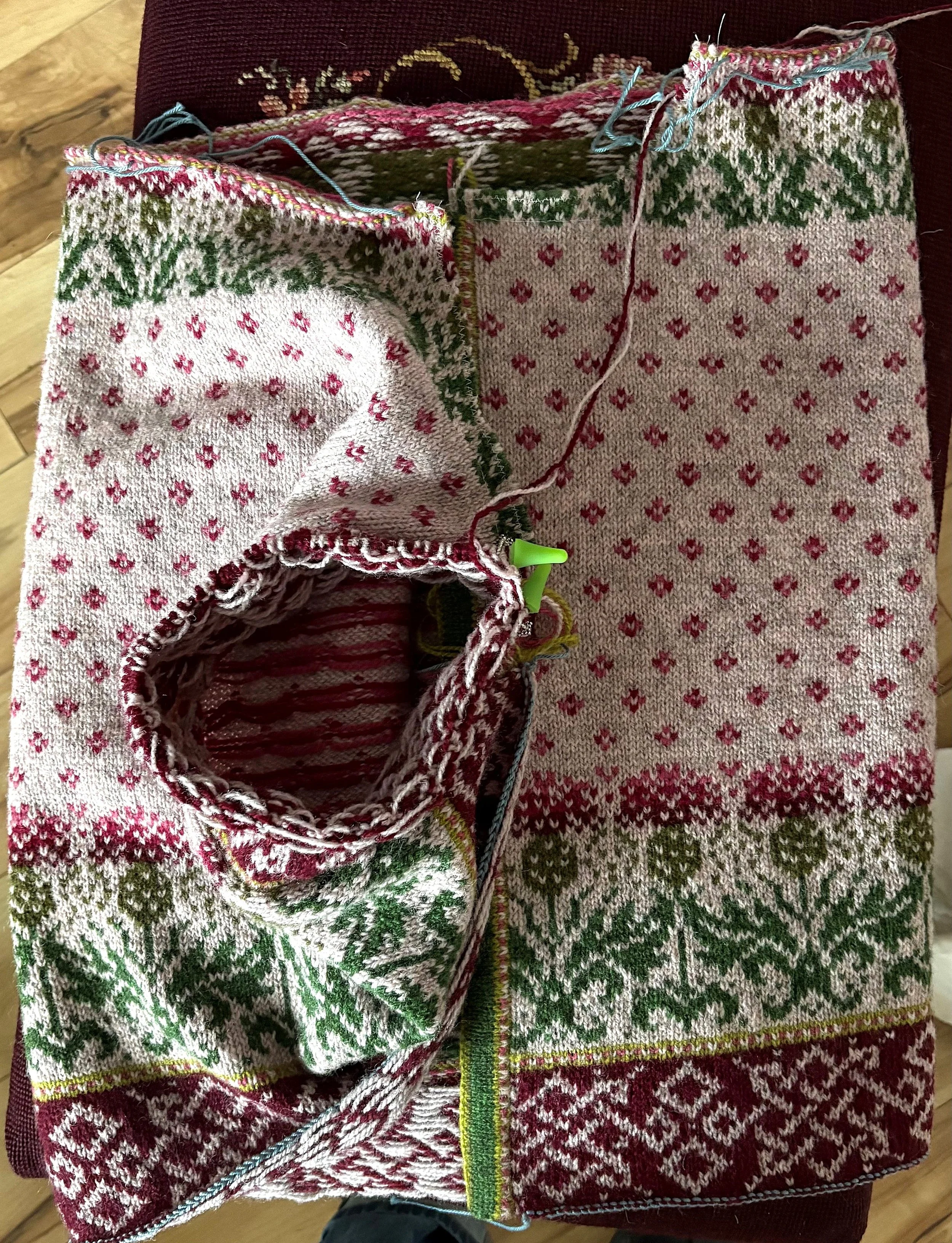
MISSION IMPROBABLE: Create a bold vertical band on the cardigan front, using the same chart as the lower border. Unbidden, a vision of the finished thing came to me and would not let me out of its teeth.

But that’s not how knitting works: The chart demands to be worked horizontally, and crucially, in the round.
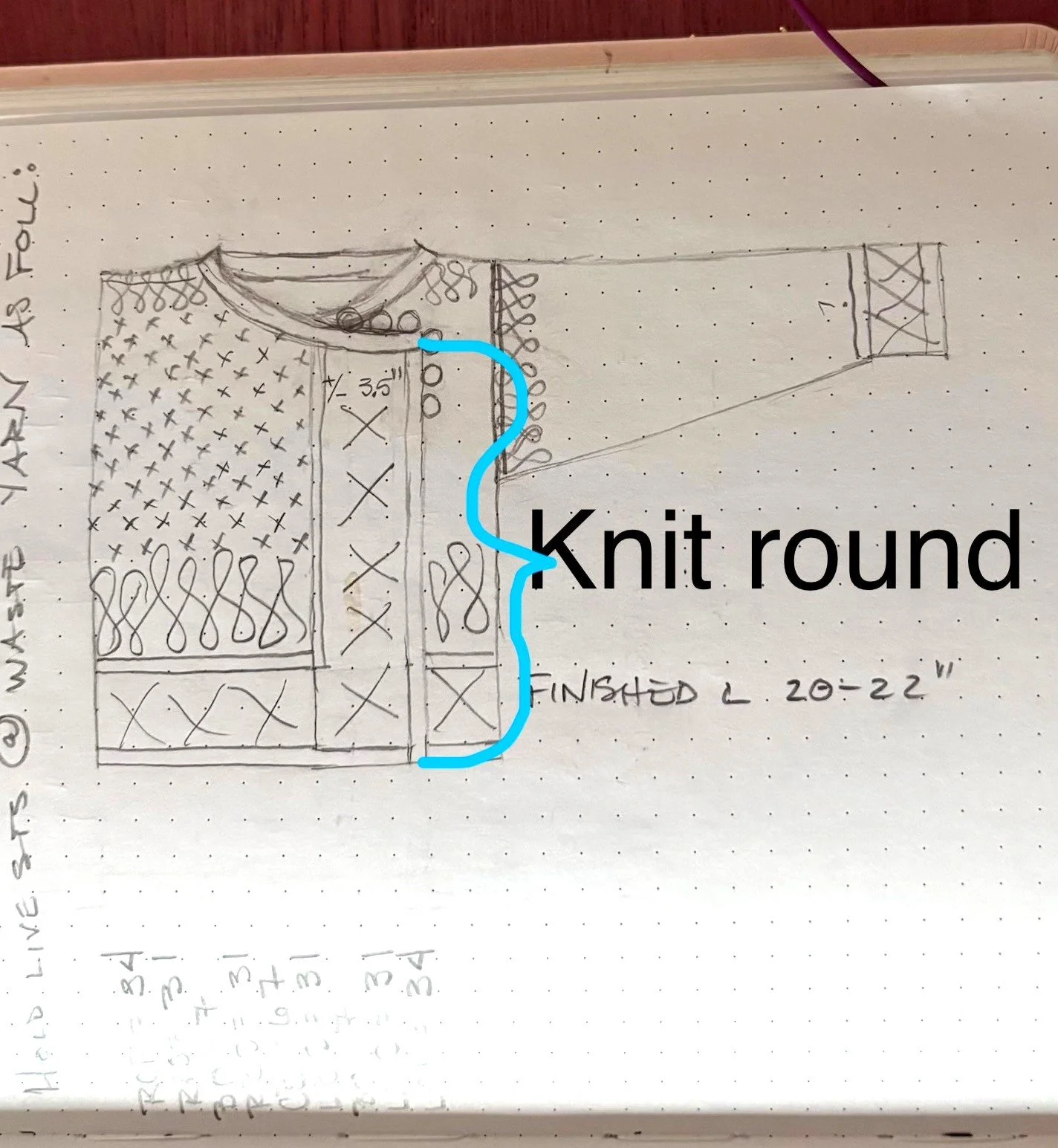
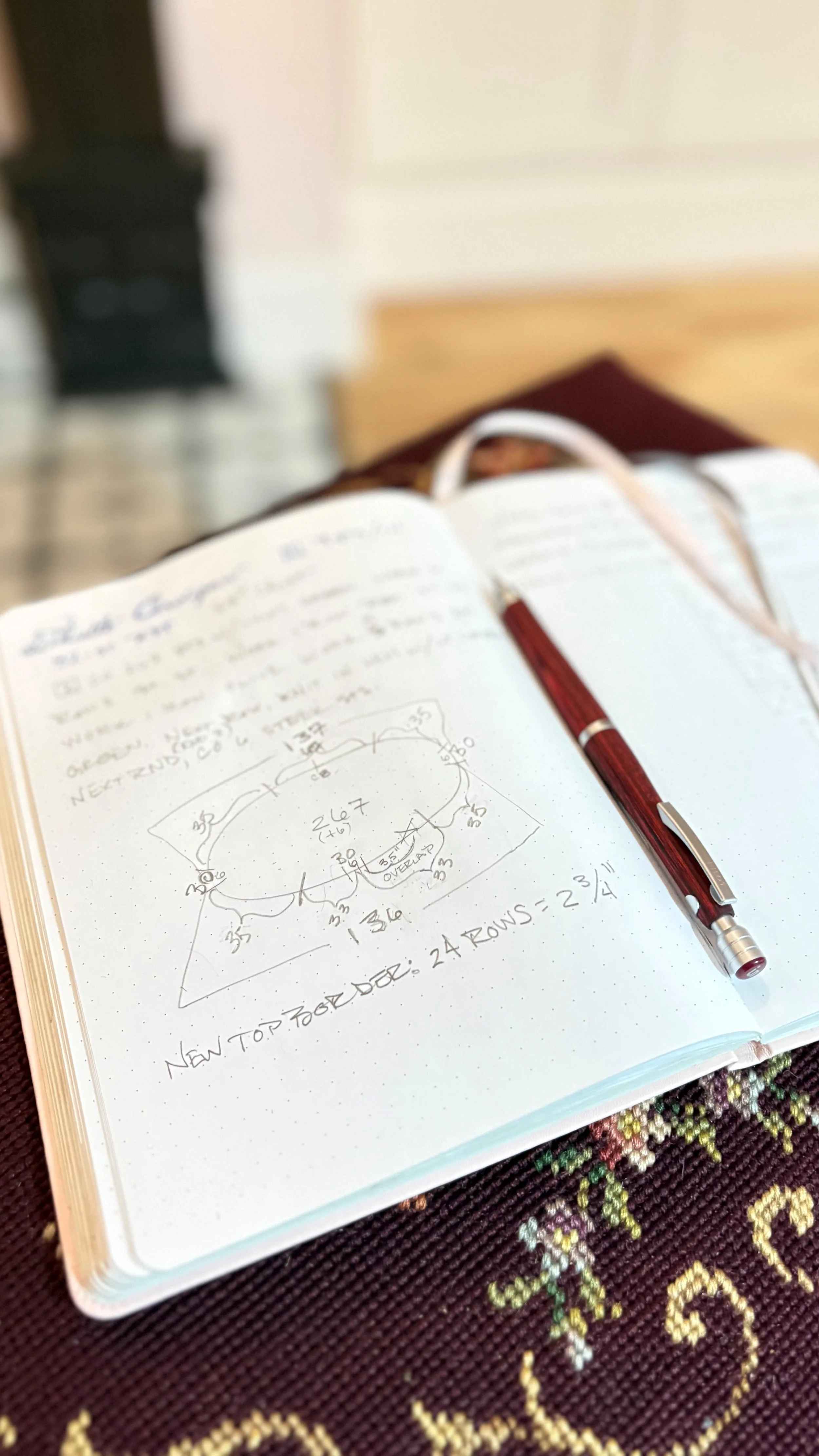
Exerpt from the Beautiful Mind notebook

I noodled on different ways to get what I wanted till my noodler was sore. Seriously, I experienced Intrusive Thoughts of the finished thing.
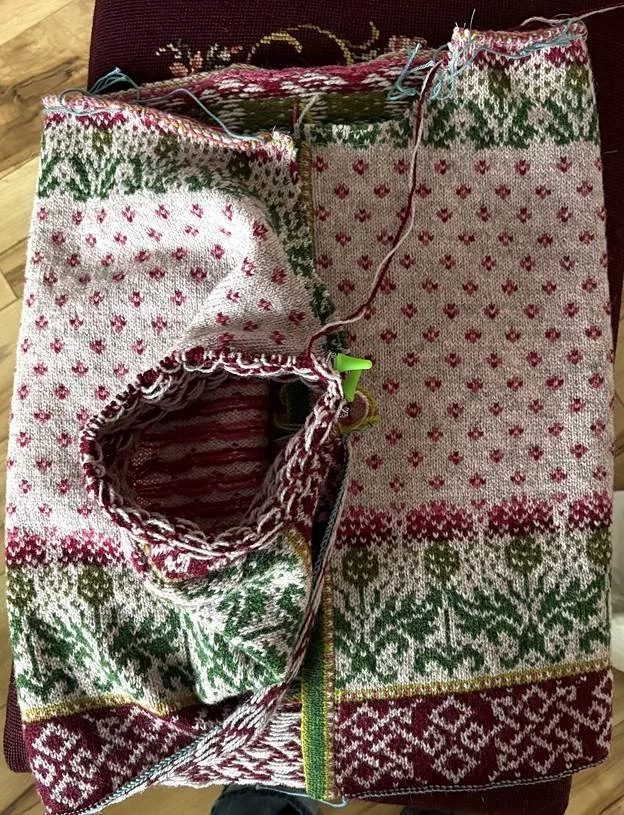
Do not try to explain this to anyone while you are knitting it

We’re used to picking up and knitting horizontal bands back and forth on cardigan fronts. It’s a short evolutionary hop to just join the ends of the band and work it as a tube. Right? Not crazy at all. Probably. I’m pretty sure.
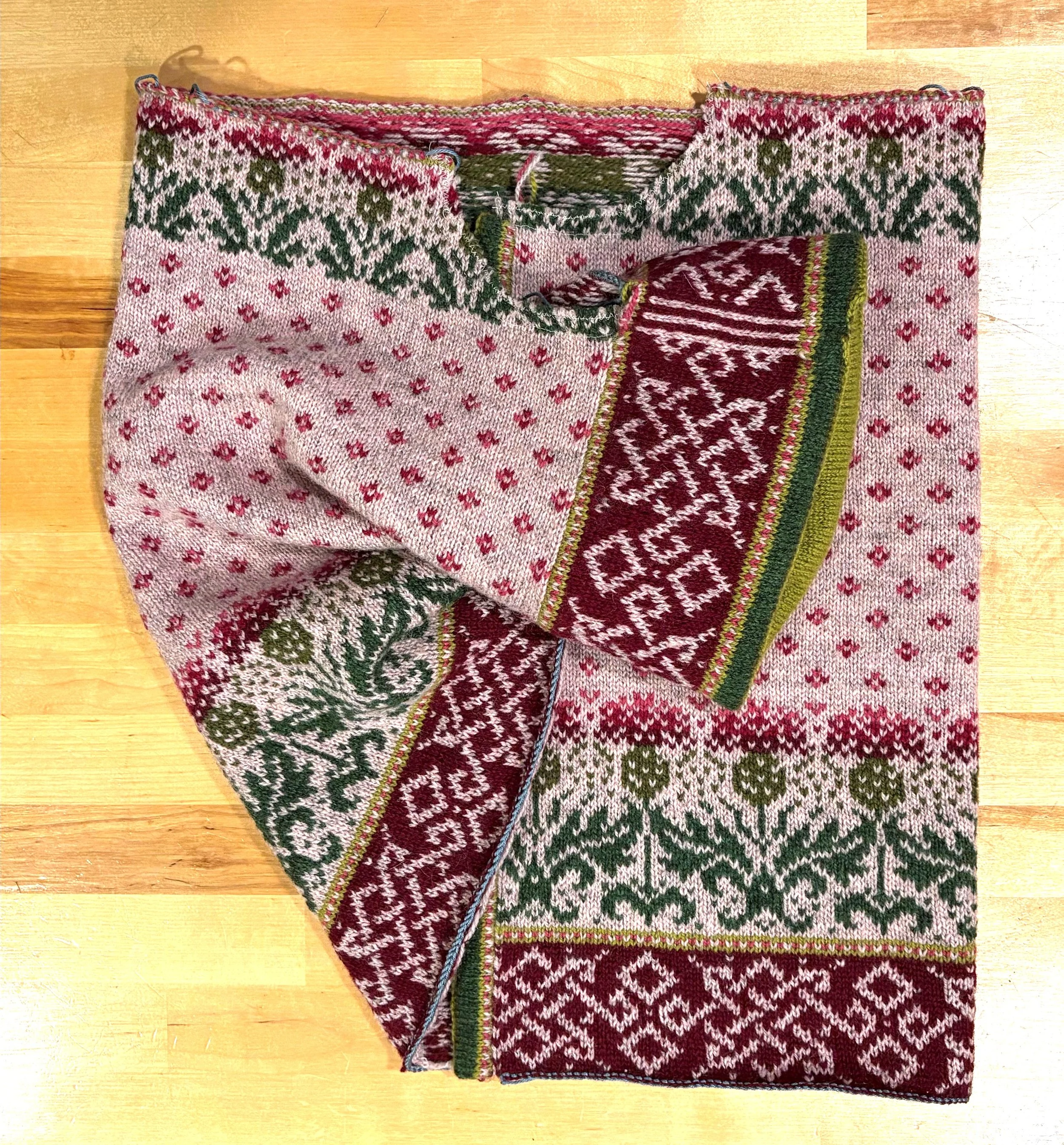
This is just crazy enough to work, amiright??

From there it was clear to see I needed an equally-wide facing to cover the vertical steek. Leaving the work joined on my circular needle, I switched to knitting back and forth to work the facing because I didn’t want any extra bulk to deal with in finishing.
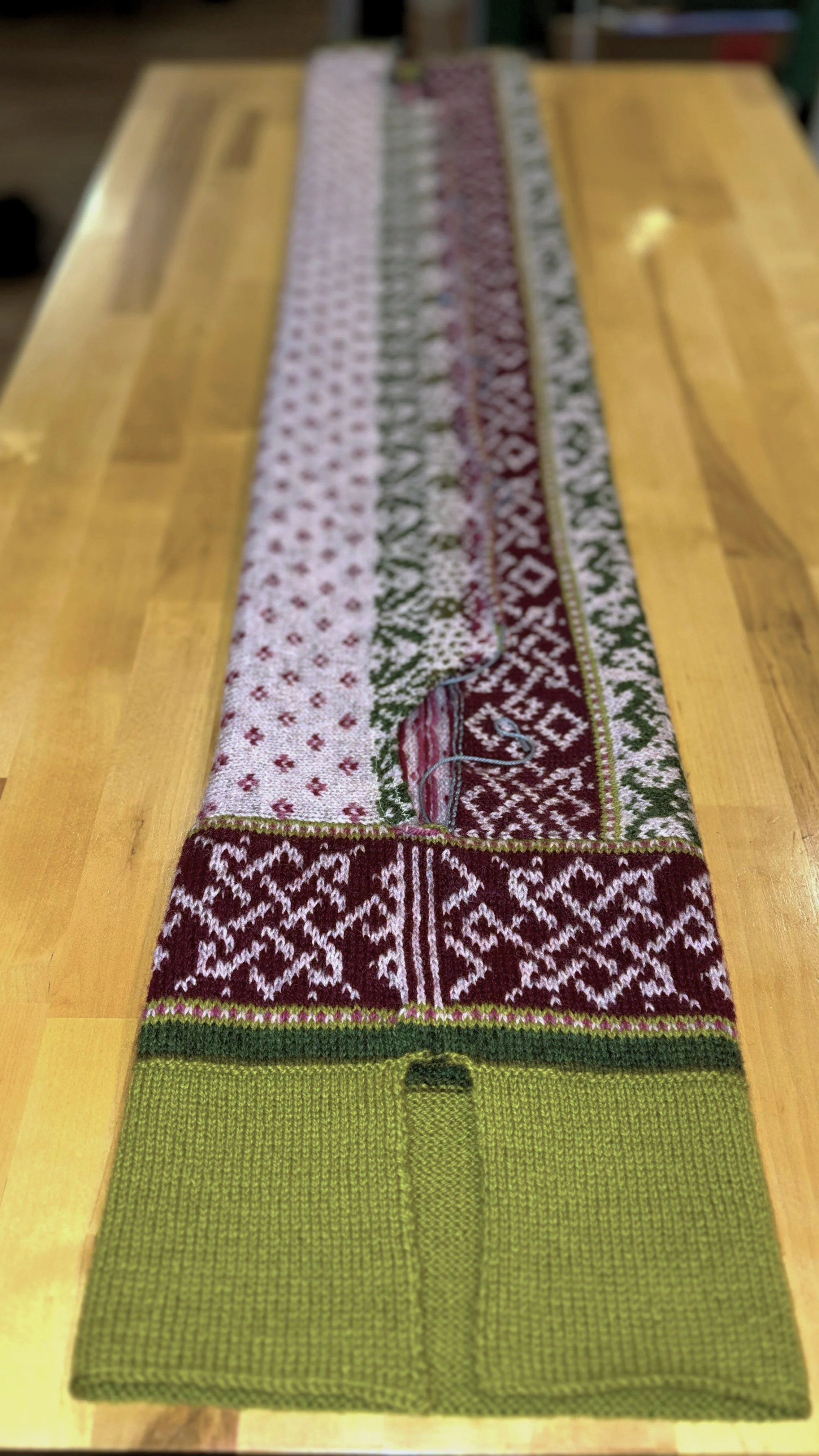
I mean, do you not?

Maybe this view of the operation will help: Once I cut this little steek, the front band will live free, as intended.
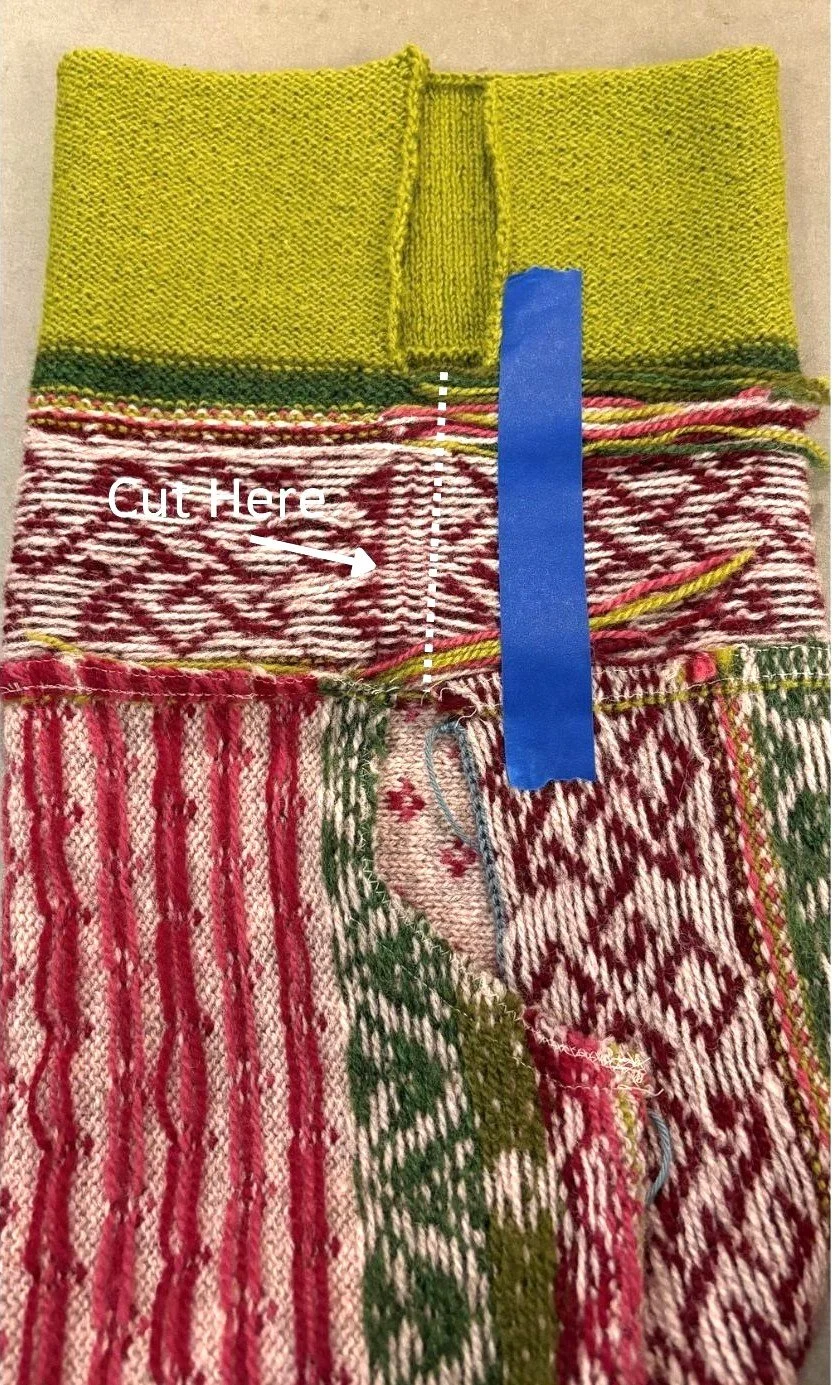
Front band steek, ready for thrill-seeking behavior

Secure , snip, block. Same thing we do every day.
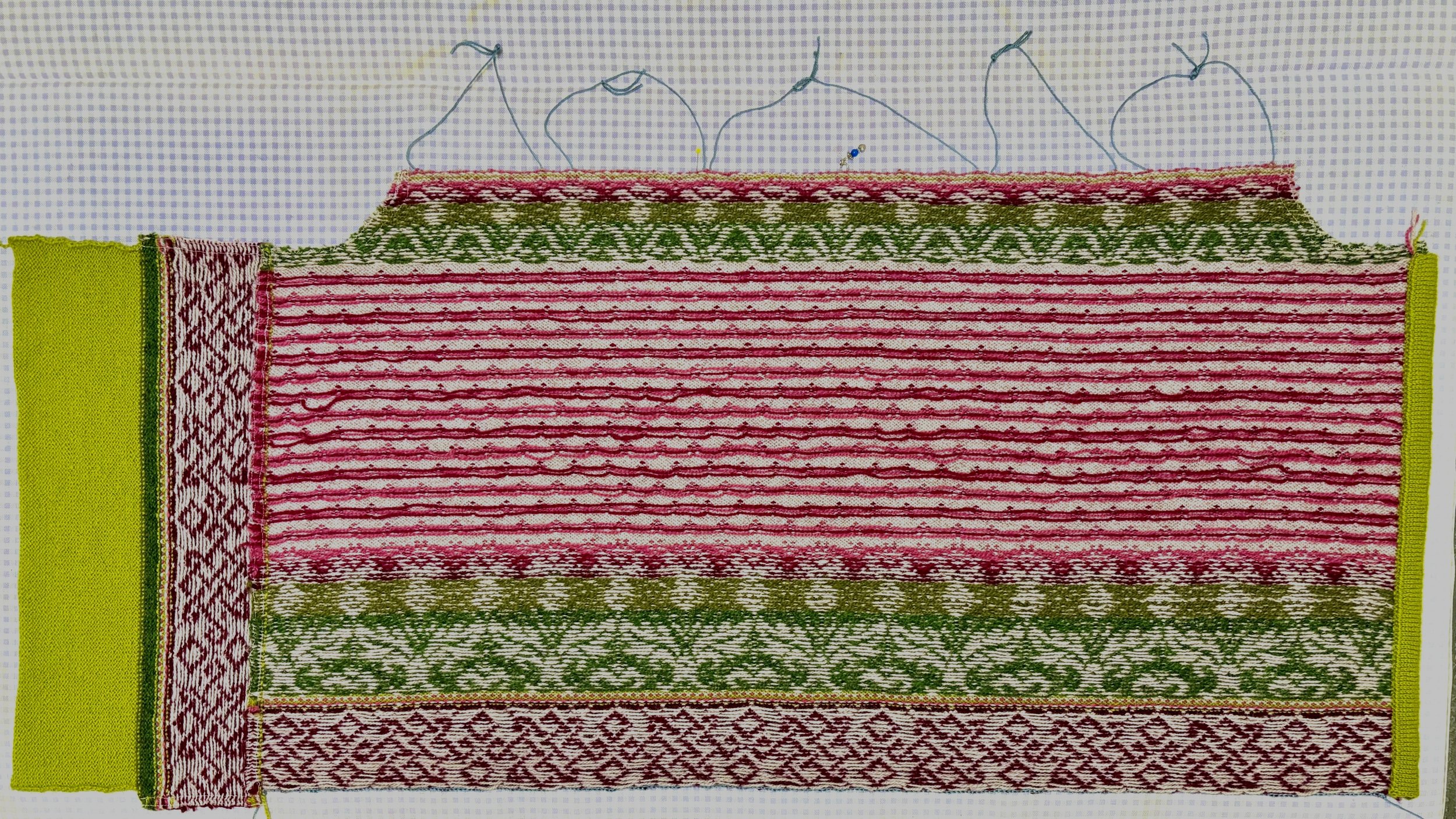
Et Voila
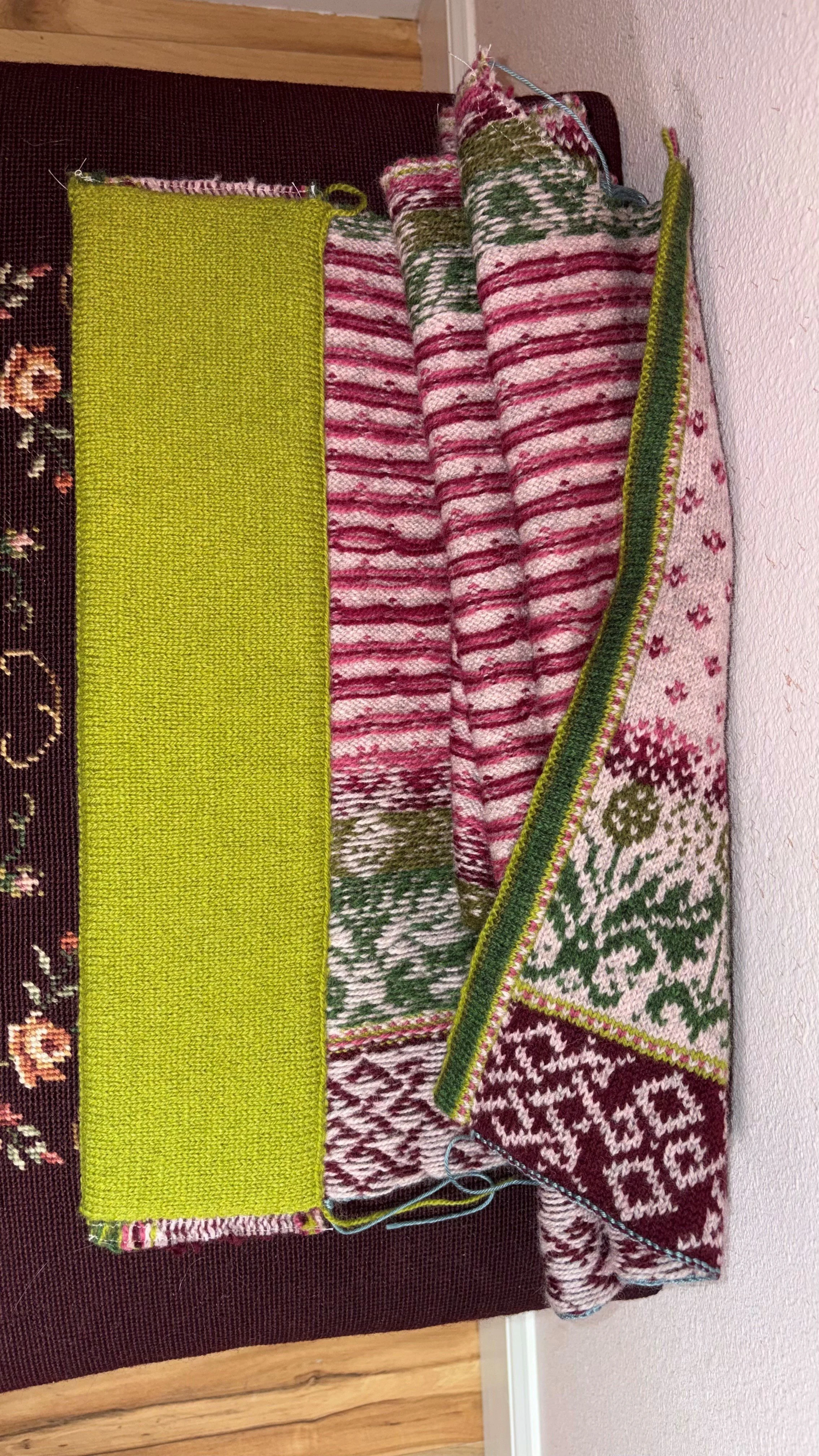
Flip the big ol’ facing to the inside and work a little tailoring magic

This is where the Thistle goes from a flat piece of knitting to a 3D tailored garment. Fiddly? Possibly. Worth the fuss? 100%.
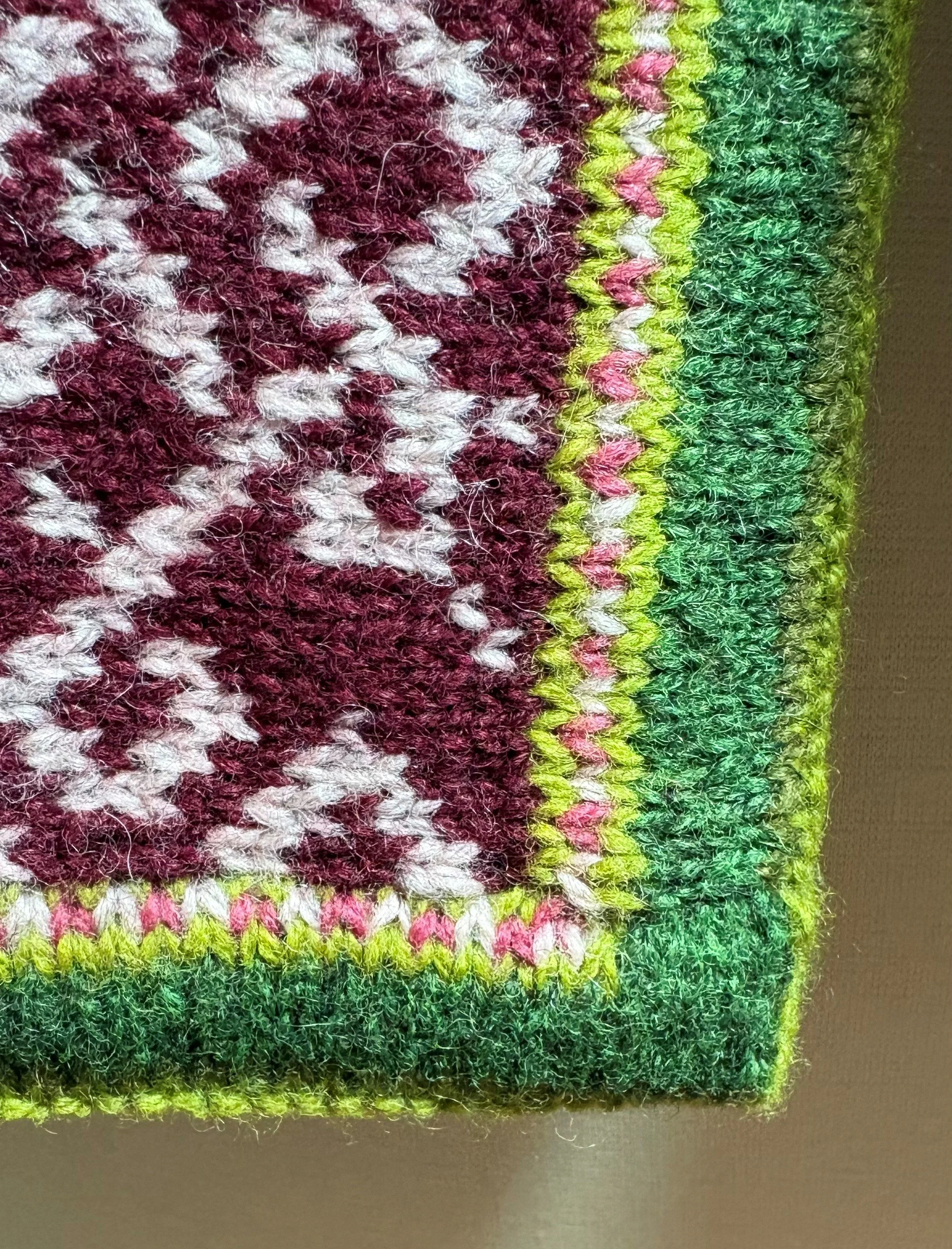
Okay, now I’m just showing off
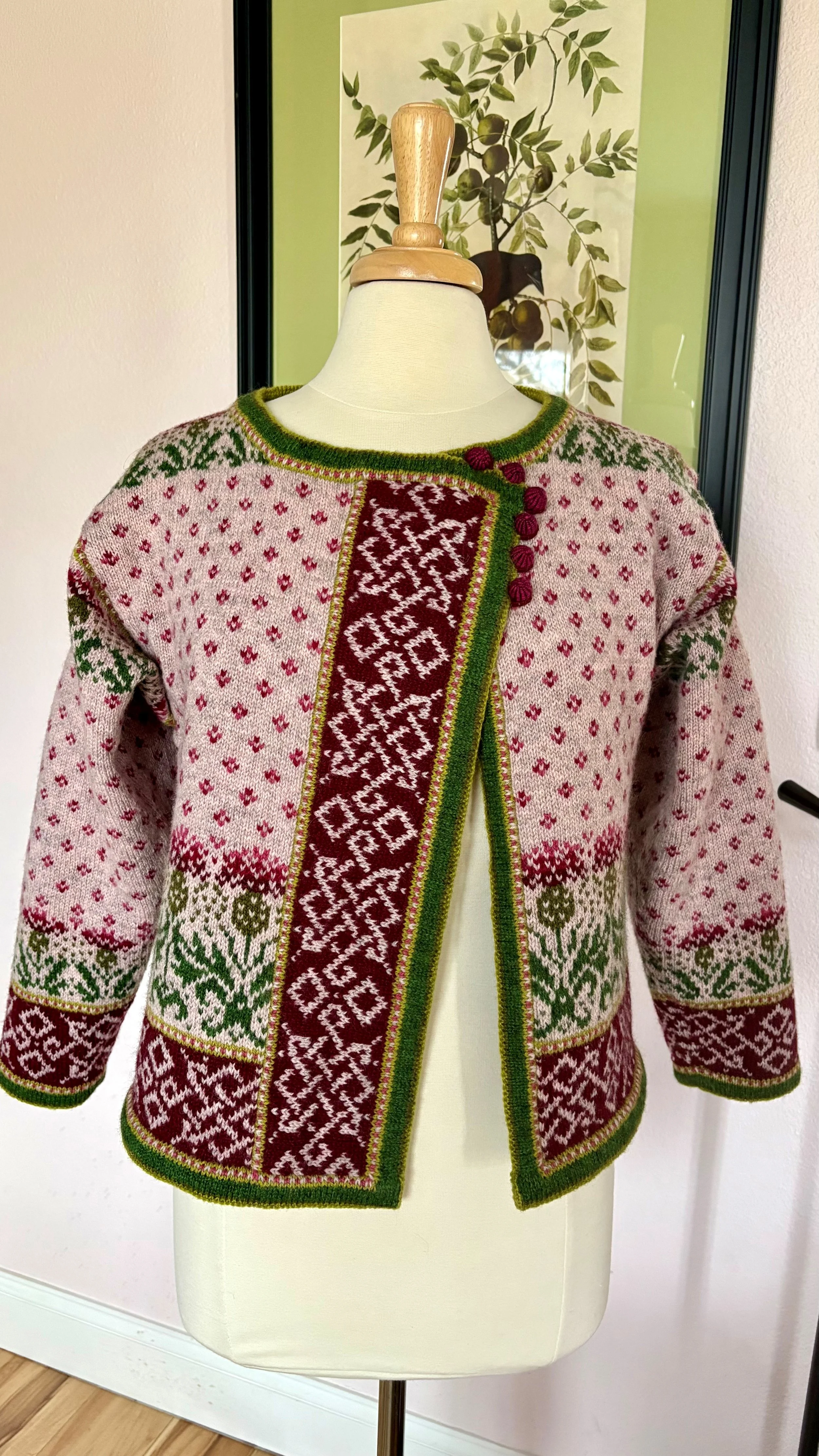
Bang.

Because More is More, and how we get there is part of the fun.
Wild Ride

"Roller coasting structure“ (US310966A) by LaMarcus A. Thompson, 1885

Sometimes I tiptoe softly into the new year, stepping gently around obstacles and deftly avoiding landslides. I slither in stealth mode; stay under the radar.

This year was not that year.

This year I crashed through at full speed, needles akimbo and yarn tails streaming out behind me.

With the subtlety of a ghost pepper.

With the delicacy of a jackhammer.

It went like this:

I was grinding away at a menial part-time job. I dutifully crawled around under the bottom shelf at the Big Orange Store. I shoved five-gallon buckets of paint from the dusty deepest darkest, out toward the man who was snarling at me in a language I don’t speak. I silently prayed for the rats not to come out while I was under there.

Over and over, every single day, I searched and applied for a better way to butter my bread. I talked to everybody I could think of. I studied the ways of the resume-busting algorithms. I interviewed. And interviewed. Wondered if I were too dumb or too smart. Too skilled or not skilled enough. Worried that I stuttered or had something in my teeth.

Meanwhile at the Big Orange Store, I mixed paint in colors that are not colors, for the people who won’t imagine more. I secretly gave those “colors” names in the sales system: “Enui Gray”. “Inevitable Beige”. “Landlord White”. A tiny protest to remind myself I still could see the rainbow as long as I remembered to look. On and on, for 19 months, not making ends meet. I begged forgiveness from creditors. I ate peanut butter and jelly. I sold my wedding ring.

You were there for this part: Late in 2025 I finally remembered to knit. I clocked a delayed project that would not be silent in my psyche any longer, and I finally picked up the yarn. You showed up, like you always do, Gentle Knitters. You welcomed me back and you cheered me on, still interested in my Real Work, no matter how long I’d gone dark. I thank Heaven for you, Every Single One.

And that’s when the dam finally broke. With no warning at all, I started to be called for more interviews. And not one or two, but ten. Twenty. More. My mind threatened to explode as I put on the navy blazer and clawed closer to sustainable employment. I remembered my lipstick and smiled. I said things like “Information Conduit” and “Team Synergy”. I worried my long poverty would make me seem desperate, but remembered there were other interviews coming if I happened to choke on one. By the end of December my mindset shifted from “Holding the line against Despair” to “Guarded Optomism”.

I crossed my fingers, even though that made it hard to knit.

Nobody panic: this is intentional. Stay tuned to find out WTF.

And that’s when the dam finally broke. Salvation in the form of a job offer. Not from a “just for now” kind of place, but from the State of Oregon. The very situation I had been praying for: Being of use to my fellow Oregonians with a team of gentle, loving and smart souls behind me.

Somebody (who isn’t a creditor) pinch me.

I get to keep my house.

I get to drive my car.

I get to keep the lights on.

I folded paper cranes and hooked one to each locker in the break room at the big orange store. A tiny gesture of thanks to the people who were kind to me in an us-against-them kind of job. I bid them farewell and wished them hope for their own futures. I tried not to fret over their stuckness in that place of empty promises and physical pain.

So, that’s where I’ve been since my last post - learning and learning and learning a very hard and engaging and rewarding new job. Not unlike what I’ve always done for you, Gentle Readers.

Just don’t tell them they’re only my secondary profession.

Job One is still playing with string.

Next time: I’ve been Thistling. A Lot.

Nuts and Bolts

Warning: This blog post contains graphic photos of sweater in progress being cut with scissors. Readers who don’t want to know how the sausage is made should maybe sit this one out.

The rubber is starting to hit the road, here at Mary Elizabeth Scott Handknitter International Headquarters. As always, while I knit/design, I keep meticulous notes about what I’m doing, how I’m doing it, and what numbers are involved. Usually they are scary-looking, and unintelligeable to anyone but me. For example, the scribble below represents a cross-section of the sweater body tube, with the division of stitches called out for cutting. My loved ones refer to my notebook as evidence of a “beautiful mind”.

The running commentary

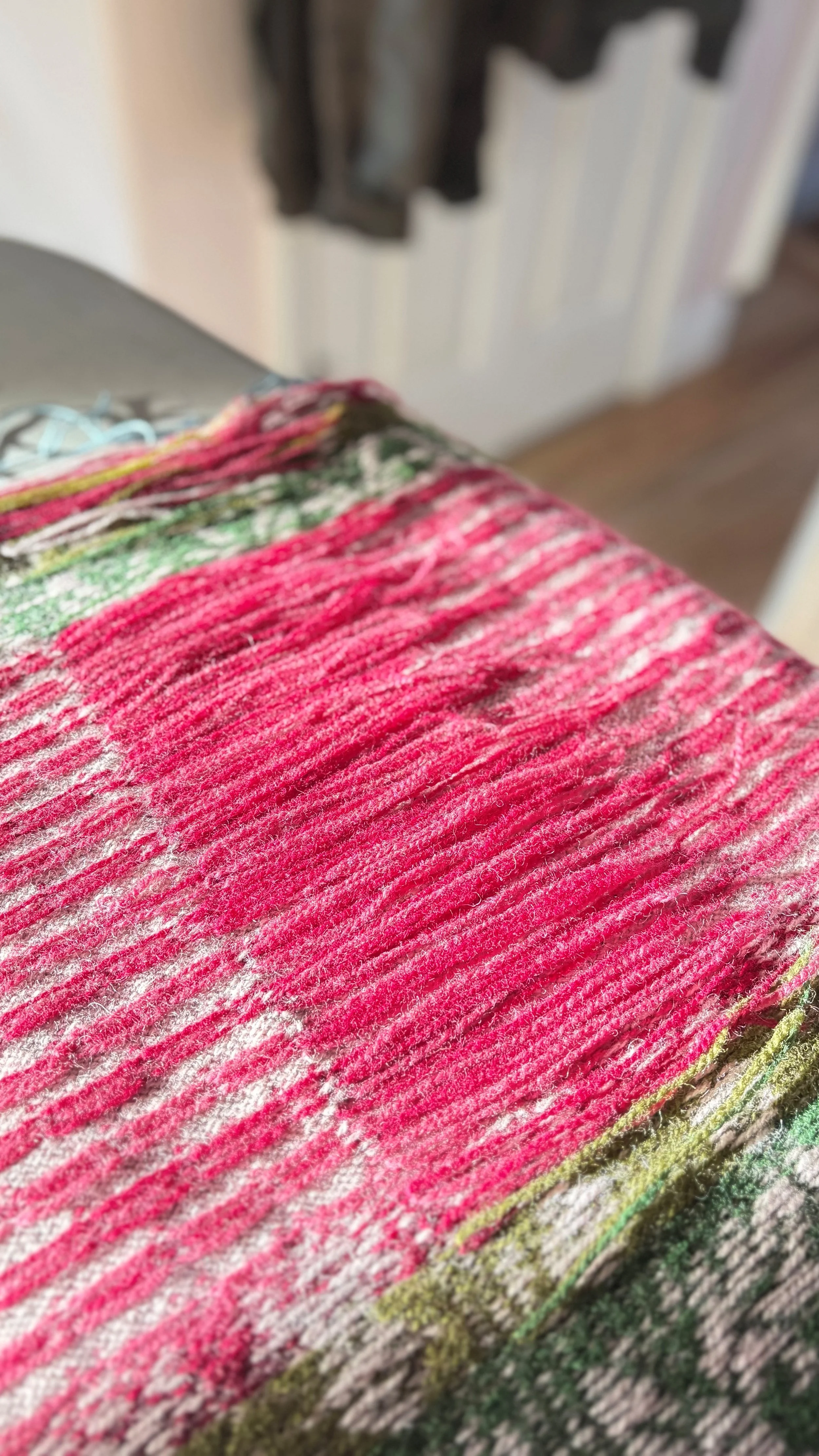
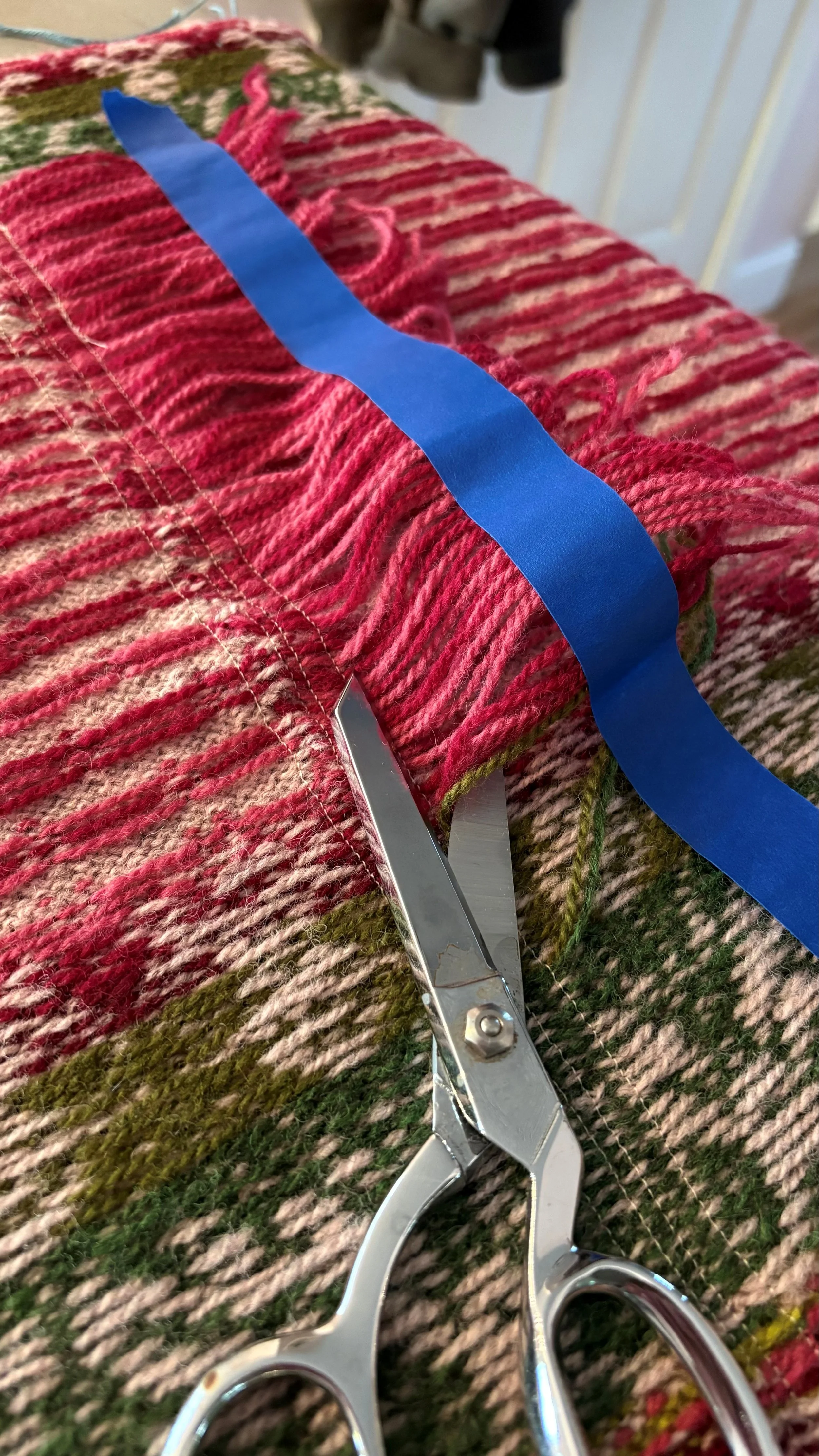
Project Milestone: The sweater body tube is complete! Time to secure the center front and neckline steeks. This time I’m securing the steek with machine stitching. I’ve chosen this technique because it works best for the particular edge treatment I’ve imagined for the center front and neckline edges. It also allows me to simply cut off the 8 trillion yarn tails created during color changes in the knitting. That’s right: I WILL NOT BE WEAVING ANY TAILS. Let that sink in for a minute. I just CUT THEM ALL OFF:

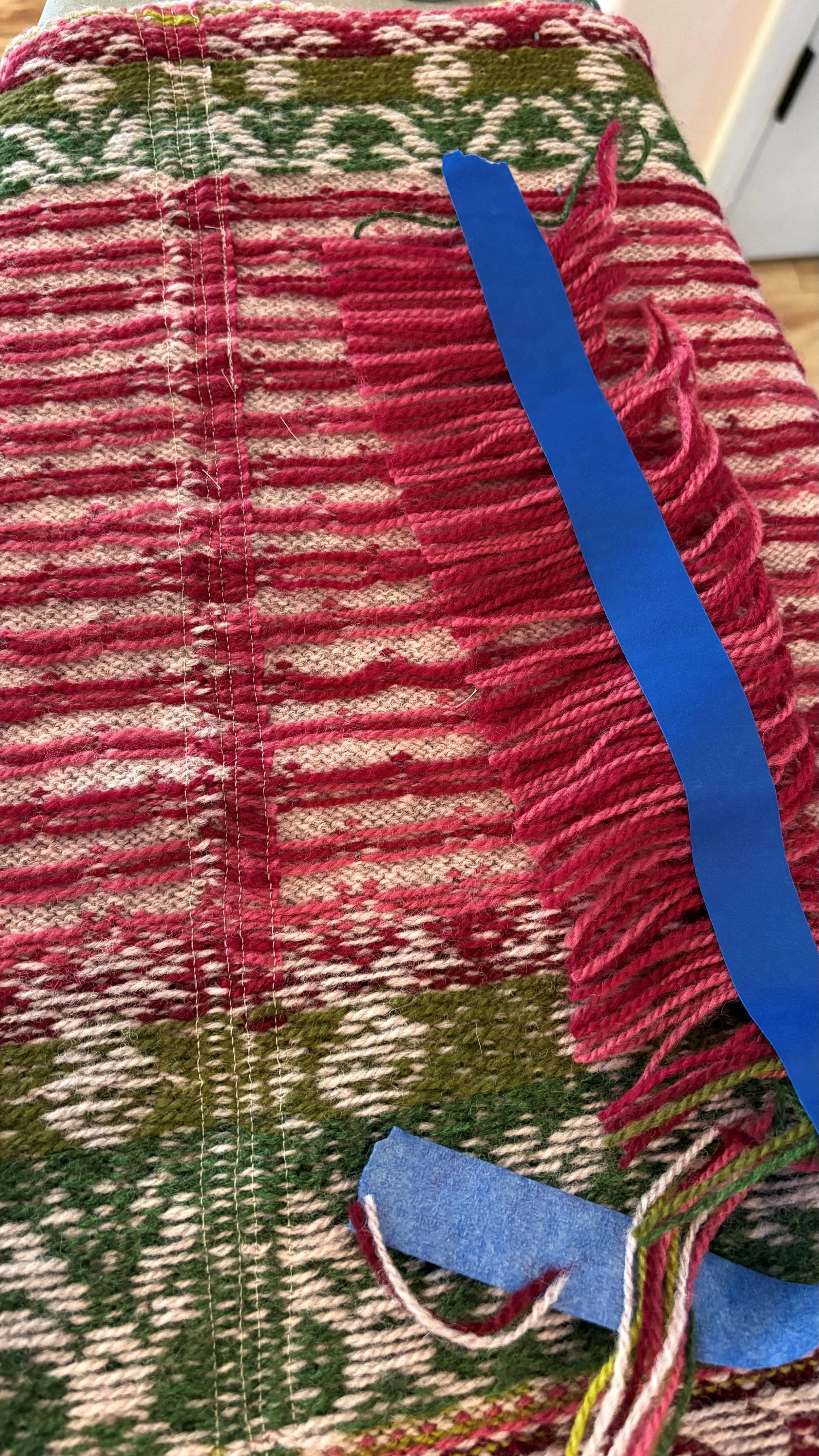
Yarn tails in Combover formation

Yarn tails machine-secured along with steek stitches (tails controlled with painters tape)

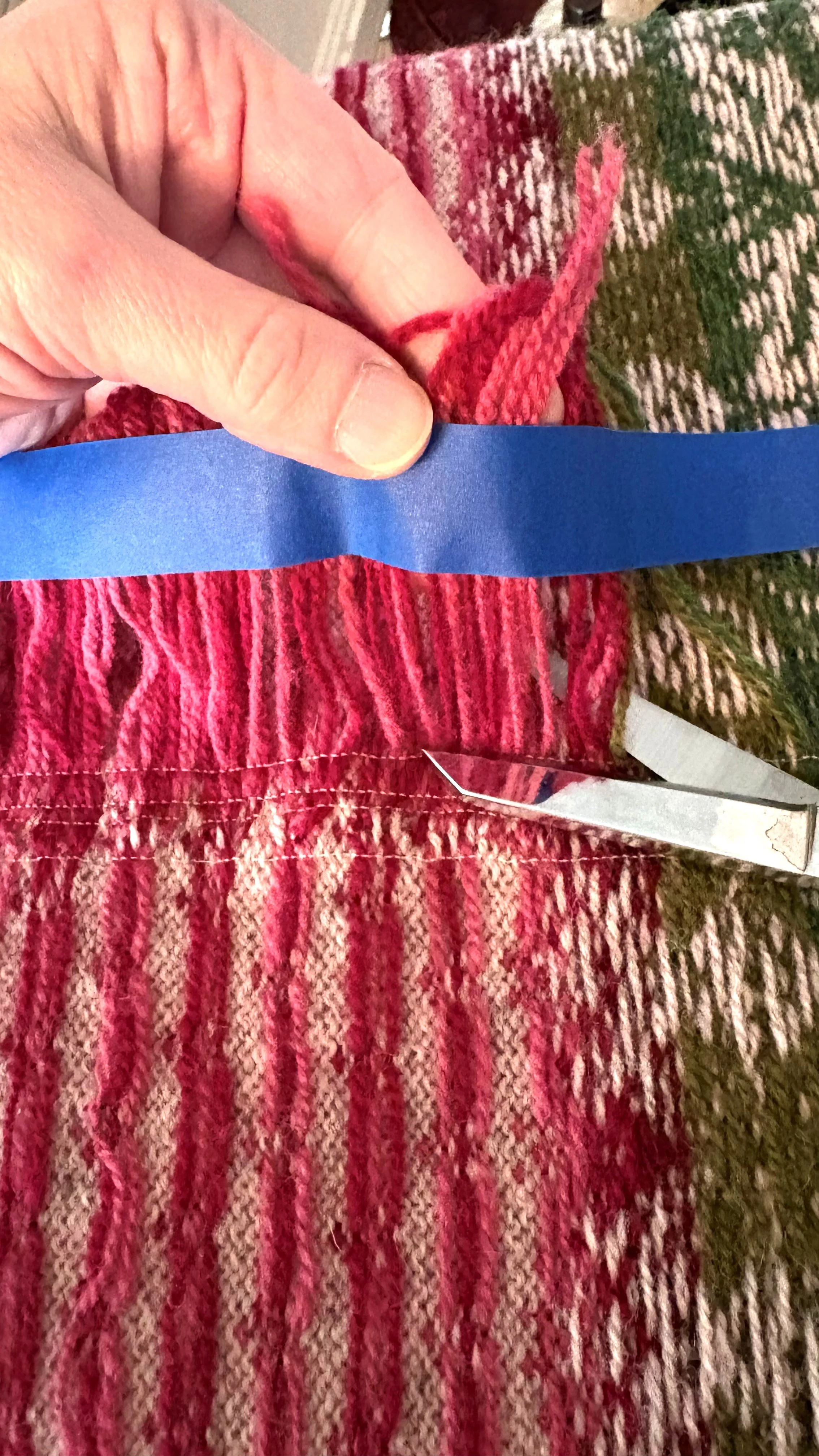
Lift the tape to hold all the tails up for removal

Cut off all the tails close to the machine stitching

It’s okay; I’ll wait while your loved ones retrieve the smelling salts to revive you.

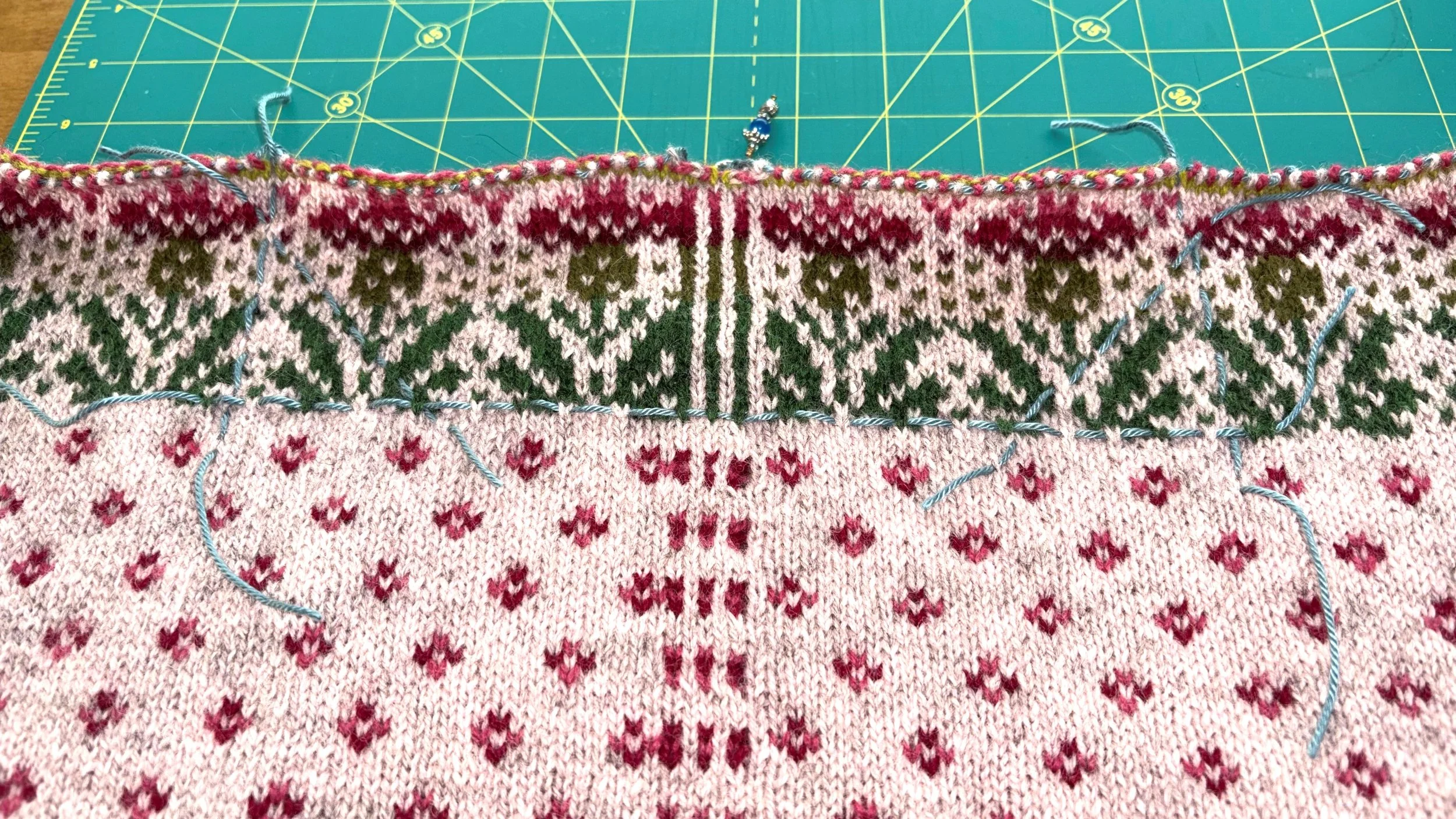
Next it’s time to plan the actual cutting. The center front steek is already secured in this photo, though the machine stitches are not visible from the front of the work. At the top of the body tube, you can see that all the knit stitches are still live. They’re divided into sections for shoulder seams, armhole slot locations and neckline areas, and held by waste yarn.

Blue cotton waste yarn markers in place for precision placement of front neckline curve

Surprise! I’ve created a smaller-scale version of the thistle border for the upper edge of the cardigan. Combined with the sexy edge treatments I have planned, it will draw attention up to your beautiful face. Because the wearer is the most important element of all my designs.

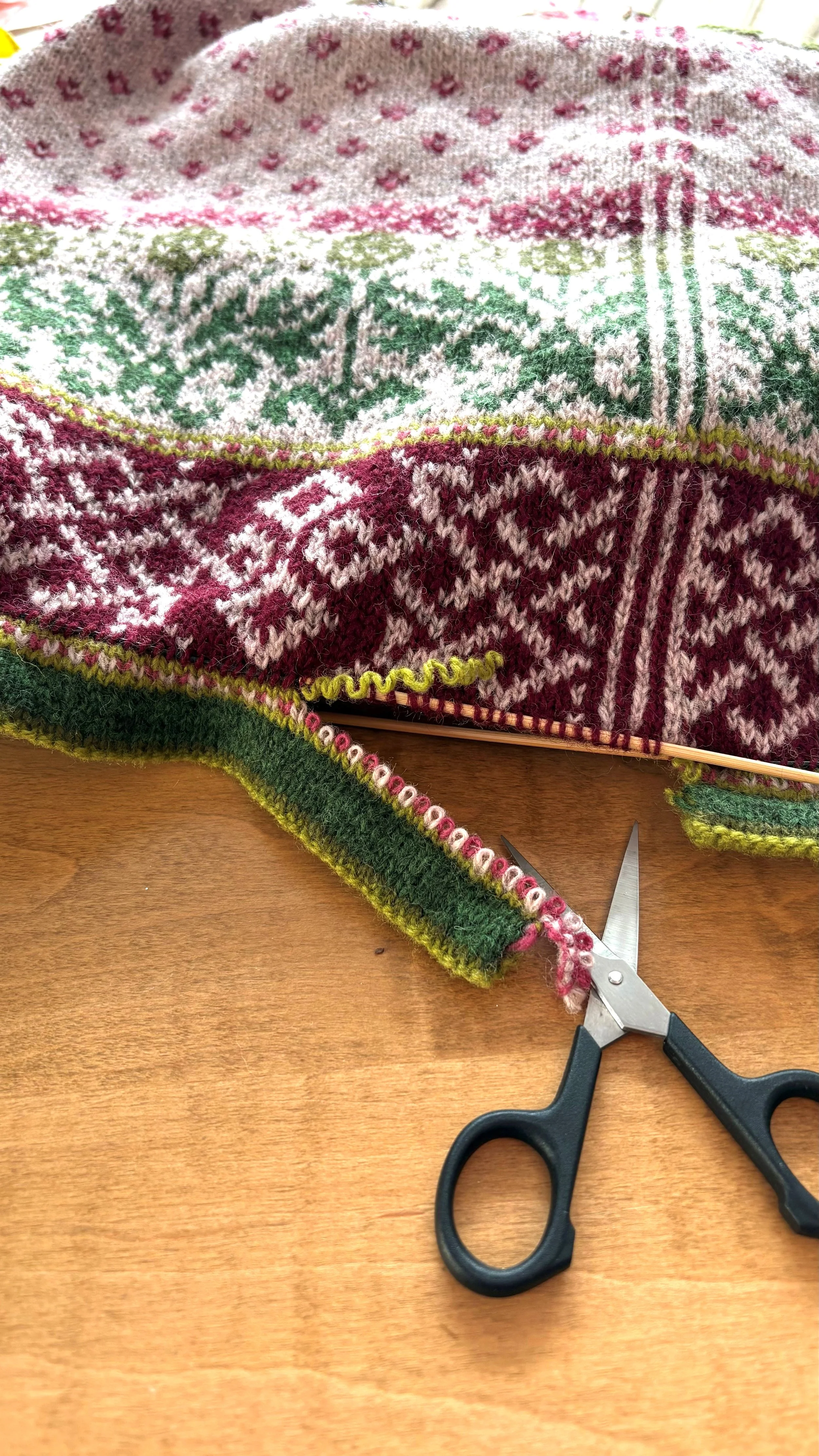
Tactical error requires surgical removal of the hem. Oops.

Mistakes are part of my process. Although the lower edge treatment was as beautiful as can be, I worked it too early. A more elegant order of operations is required, so away it goes (for now). I just snip out one round of knitting, placing the resulting live stitches on a slender needle as I go. Afterward, I’ll crochet a temporary waste yarn bindoff to hold them safe until I’m ready to work the final lower edge.

The most wonderful thing about knitting is that it never goes on your permanent record. There is almost nothing you can knit that can’t be turned back into yarn.

I hope you’ve enjoyed this brief glimpse into the process of translating my crazy into a coherent and knittable design. Next stop: Working a straight edge in a circle. Because why not?

I promise I am mad but North-Northwest.